
Operations & Lifecycle
Software Maintenance and Support
Protect your software investment with scheduled security patching, proactive dependency upkeep, backup checks and responsive engineering support.
Launching an application or integration is only the start of its operational life. Browsers update, third-party APIs deprecate old endpoints, open-source packages publish security advisories, and your business rules naturally evolve over time.
Our Software Maintenance and Support engagements provide structured preventative care alongside a predictable monthly allocation for bug fixes, minor enhancements and technical assistance.
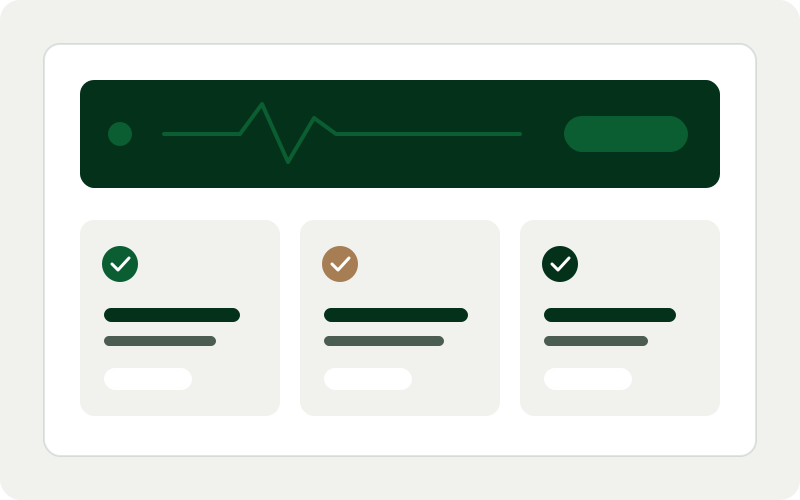
Security Advisories
Monitored
Scheduled patch cycles
Backup Restores
Verified
Periodic test drills
Change Log
Tracked
PR-reviewed releases
Typical Architecture Layers
- 1Health & Error Monitoring
- 2Security & Dependency Patching
- 3Backup & API Deprecation Checks
- 4Prioritised Enhancement Queue
Deliverables & scope boundaries
Clear boundaries prevent project surprises. Below is what a typical software maintenance and support engagement includes—and what sits outside scope unless separately agreed.
What this service includes
- Initial codebase, dependency and deployment health review before onboarding
- Scheduled framework and package security updates tested in staging before production release
- Monitoring of upstream third-party API deprecation notices and SSL/domain renewals
- Periodic backup restoration verification and database health checks
- Tracked issue queue for bug resolution and agreed minor feature refinements during Australian business hours
Explicitly excluded from standard scope
- 24/7/365 round-the-clock emergency call-out unless explicitly contracted under a dedicated SLA
- Major new module builds or full re-platforming projects (scoped transparently as separate milestones)
- End-user helpdesk support for general office software unrelated to the supported application
Who this service suits
- Organisations running custom web portals, dashboards or integrations without an in-house software team
- Internal IT leads wanting reliable engineering cover for custom TypeScript/React/Node/SQL applications
- Businesses inheriting a custom codebase that needs stabilisation, documentation and regular upkeep
Inputs needed from your team
To keep delivery smooth and avoid assumptions, we ask your team for:
- Repository access, staging/production environment credentials and existing documentation
- A nominated product owner to confirm priority order for enhancement requests
- Advance notice of planned changes to connected third-party business tools
How delivery works
Step 01
Technical Onboarding Audit
Review repository health, deployment reproducibility, secrets, backups and urgent security patches.
Step 02
Stabilisation & Monitoring
Ensure staging parity, error logging and health notifications are in place.
Step 03
Monthly Maintenance Cycle
Apply tested security patches, verify backups and deliver prioritised backlog items.
Step 04
Quarterly Health Summary
Share a concise plain-English summary of updates applied, system trends and upcoming recommendations.
Common questions about software maintenance and support
Do you take over maintenance for applications originally built by another developer?
We can evaluate existing React, Next.js, Node.js, TypeScript or SQL codebases via an initial technical audit. That audit identifies any critical blockers or missing deployment scripts honestly before either side commits to ongoing support.
What happens if we don’t have any feature requests in a given month?
Preventative tasks—security patching, dependency upgrades, performance checks, test coverage improvements and backup restore drills—keep the system healthy so issues do not accumulate.
Can we cancel or transition support back in-house later?
Yes. All documentation, runbooks and code changes live in your repositories, making future transition to an internal hire straightforward.
Related services
Discuss software maintenance and support for your business
Share a short overview of your current tools and goals—we will outline a practical scope, expected inputs and sensible next steps.