
Integration & Data
Database Design and Optimisation
Fix sluggish queries, untangle messy tables and design relational schemas built for data integrity and long-term maintainability.
Slow application screens, timing-out reports and inconsistent records almost always trace back to the database layer—missing composite indexes, unnormalised tables storing comma-separated values, N+1 ORM queries or absent foreign-key constraints.
We design clean relational schemas for new systems and diagnose bottlenecks in existing PostgreSQL, MySQL or SQL Server databases using execution plans, index analysis and safe, reversible migration workflows.
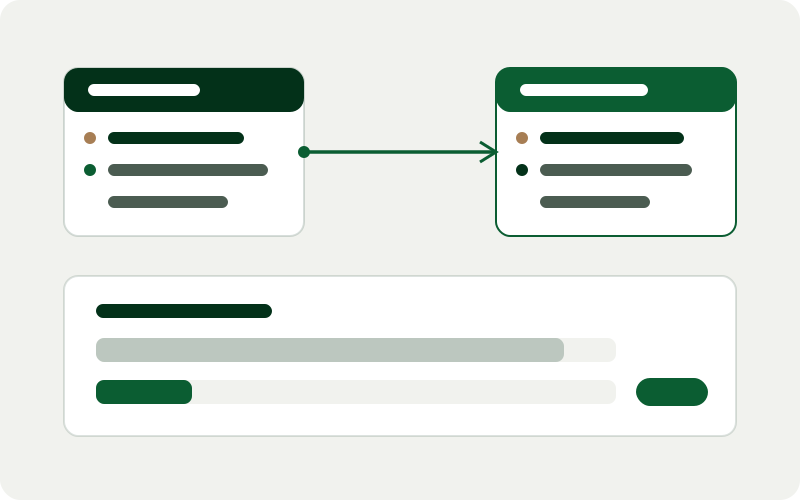
Execution Plan
Index Scan
Replaces full table scan
Integrity
FK + Check
Enforced at DB layer
Migrations
Versioned
Reversible SQL scripts
Typical Architecture Layers
- 1Workload & Query Profiling
- 2Relational Normalisation
- 3Composite Indexing Strategy
- 4Backup & Restore Verification
Deliverables & scope boundaries
Clear boundaries prevent project surprises. Below is what a typical database design and optimisation engagement includes—and what sits outside scope unless separately agreed.
What this service includes
- Relational data modelling with proper primary keys, foreign keys, check constraints and audit columns
- Slow-query analysis (`EXPLAIN ANALYZE` profiling) and targeted index optimisation
- Refactoring of N+1 application query patterns and heavy reporting queries (materialised views, partitioning)
- Version-controlled, zero-or-low-downtime schema migration scripts
- Review of automated backup schedules, point-in-time recovery configuration and restore testing
Explicitly excluded from standard scope
- Forensic recovery of physically damaged on-premise hard drives
- Unauthorised access to third-party hosted databases where your vendor restricts database-level permissions
Who this service suits
- Teams whose existing web application or dashboard slows down noticeably as record counts grow
- Businesses consolidating scattered spreadsheets or legacy Access/file databases into a modern SQL database
- Development teams wanting an experienced second pair of eyes on schema architecture before launch
Inputs needed from your team
To keep delivery smooth and avoid assumptions, we ask your team for:
- Database engine version, hosting environment details and current schema dump (or staging clone)
- Examples of screens, reports or batch jobs experiencing slowdowns or data anomalies
- Approved maintenance window if structural table migrations are required
How delivery works
Step 01
Schema & Query Baseline
Inspect table structures, constraints, index bloat and slowest query execution plans.
Step 02
Architecture / Tuning Plan
Document proposed schema changes, indexes or query rewrites along with expected trade-offs.
Step 03
Staged Validation
Run migrations and benchmark query execution against a staging clone of production volume.
Step 04
Production Rollout & Docs
Apply changes safely with rollback plans, updated ER diagrams and backup verification notes.
Common questions about database design and optimisation
Can you optimise our database without rewriting our whole application?
Often, yes. Adding missing composite indexes, rewriting a handful of expensive reporting queries or introducing a scheduled materialised view frequently resolves major slowdowns without touching frontend code.
Which database engines do you work with?
Our primary focus is relational SQL systems—particularly PostgreSQL, MySQL/MariaDB and SQLite/cloud relational services—chosen for reliability, transactional guarantees and broad ecosystem support.
Do you test backups as part of database work?
Yes. An untested backup is only an assumption, so we verify that backup snapshots can actually be restored into an isolated test instance.
Related services
Discuss database design and optimisation for your business
Share a short overview of your current tools and goals—we will outline a practical scope, expected inputs and sensible next steps.