
Integration & Data
API and System Integration
Make your existing software stack exchange data reliably—with proper error recovery, idempotency and audit visibility.
Copy-pasting customer details, invoices, stock counts or job statuses between platforms wastes skilled staff hours and inevitably introduces transcription errors. At the same time, brittle no-code zaps often fail silently once volumes grow or business rules require conditional logic.
We build well-engineered API integrations, webhook listeners and synchronisation services that validate payloads, handle rate limits gracefully, prevent duplicate records and surface clear logs whenever a record needs human attention.
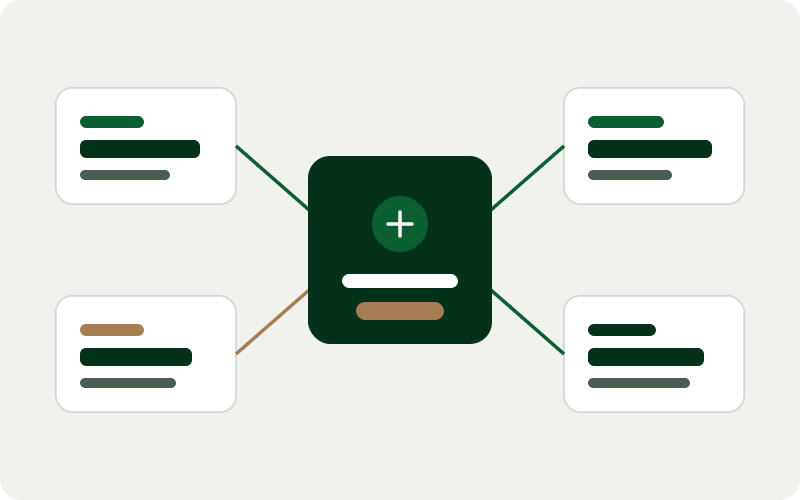
Payload Checks
Schema Validated
Strict type guards
Idempotency
Keyed
Prevents duplicate writes
Failure Handling
Retry + Alert
Exponential backoff
Typical Architecture Layers
- 1Source Webhooks / Polling
- 2Schema & Auth Verification
- 3Mapping & Idempotency Store
- 4Target API Delivery + Logs
Deliverables & scope boundaries
Clear boundaries prevent project surprises. Below is what a typical api and system integration engagement includes—and what sits outside scope unless separately agreed.
What this service includes
- Technical feasibility review of vendor API documentation, rate limits and authentication schemes
- Custom middleware services supporting REST, GraphQL, webhooks or scheduled batch syncs
- Idempotency keys and deduplication logic so network retries never create double invoices or orders
- Encrypted credential storage, least-privilege token scoping and structured sync logs
- Exception alerting (email or team channel notifications) when upstream data violates business rules
Explicitly excluded from standard scope
- Bypassing vendor licensing terms or scraping websites that prohibit automated access
- Modifying closed-source third-party software where no supported API or export mechanism exists
Who this service suits
- Operations teams manually re-entering orders, jobs or timesheets across two or more platforms
- Businesses outgrowing fragile point-to-point no-code automations that lack error visibility
- Companies needing custom internal software to sync cleanly with established accounting or CRM platforms
Inputs needed from your team
To keep delivery smooth and avoid assumptions, we ask your team for:
- List of platforms involved and the exact trigger events that should sync data
- Developer/sandbox API access or administrator assistance to provision scoped API keys
- Business rules for conflict resolution (which system is the source of truth per field)
How delivery works
Step 01
API & Field Mapping Audit
Verify vendor endpoints, sandbox availability, authentication flows and field-level edge cases.
Step 02
Sandbox Integration Build
Develop transformation rules, retry queues and duplicate prevention against test records.
Step 03
Parallel Verification
Run dry-run or shadow syncs to verify mapped records match expected outcomes.
Step 04
Cutover & Monitoring Setup
Enable live sync with health checks, clear log retention and operational runbooks.
Common questions about api and system integration
What if one of our legacy systems does not have a modern REST API?
Where a modern API is unavailable, we assess supported alternatives such as scheduled SFTP CSV/XML drops, direct read-only database replicas or vendor-approved SDKs.
How do you stop duplicate customers or invoices from being created?
Every integration maintains external reference mappings and idempotency keys, checking existing identifiers before creating new records and safely retrying interrupted network requests.
Can our staff see whether a sync succeeded without asking a developer?
Yes. We include clear sync status logs or lightweight admin views showing recent runs, record counts and plain-English error messages when a record requires correction.
Related services
Discuss api and system integration for your business
Share a short overview of your current tools and goals—we will outline a practical scope, expected inputs and sensible next steps.